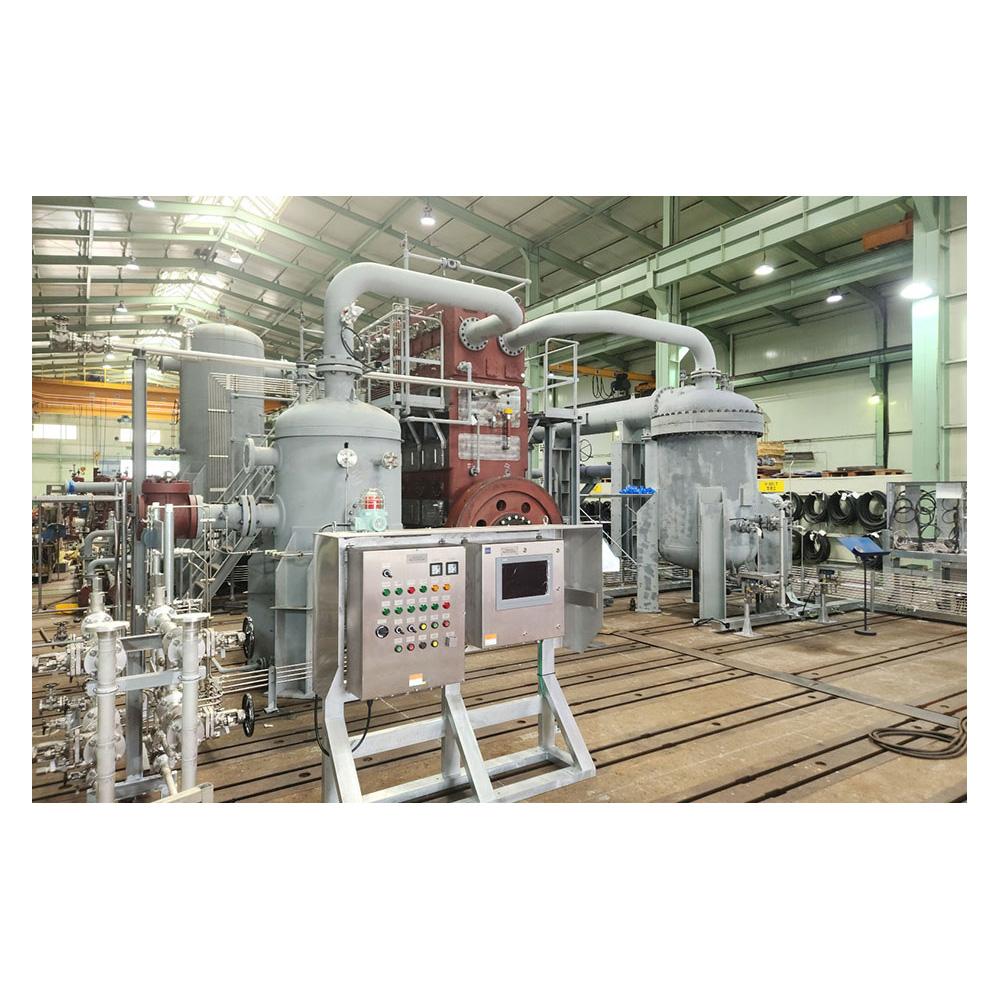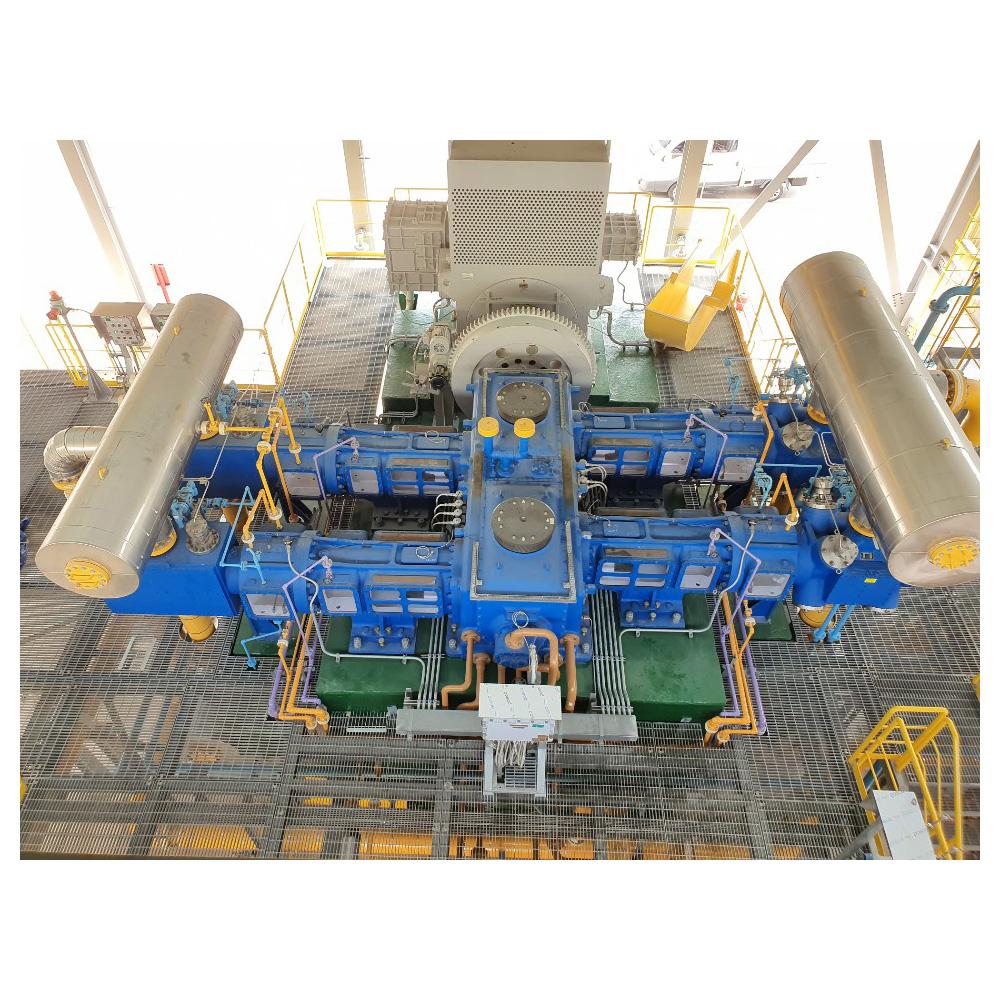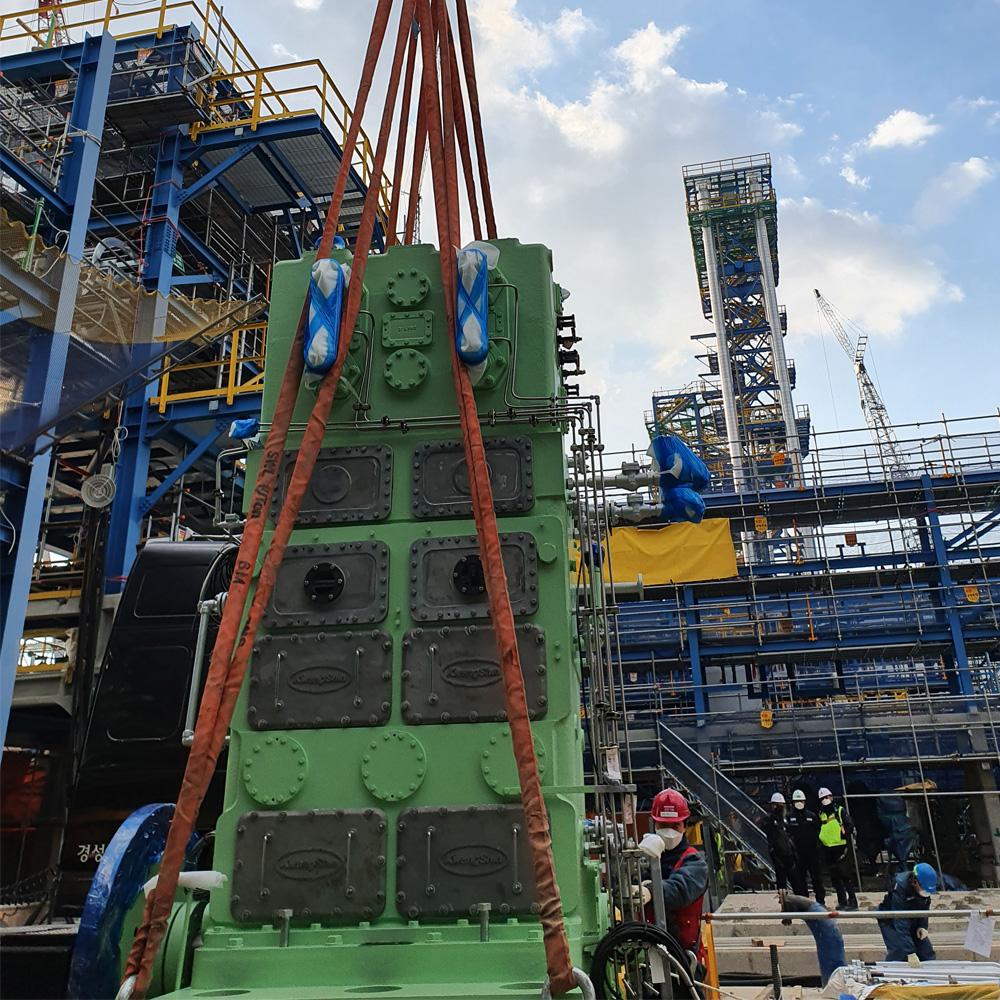


API 618 Heavy-Duty Reciprocating Process Gas Compressor
-
Payment
L/C(sight) , T/T
-
MOQ
1 Set
-
Supply Ability
100 Set per One-Time
-
Supply Details
Customization Limited goods
Negotiable / Depends on quantity
-
Country of sale
Asia, Americas, Europe, Middle East, Africa
-
PRICE
-
EXW
Depend on quantity
-
ITEM SPECIFICS
-
Brand
RECIPROCATING COMPRESSOR
-
origin
Republic of Korea
-
Size(Capacity)
100 kW to 20,000 kW
-
Function
Performs a key role in compressing various types of gases at high pressure for process supply in pet
-
Material
Constructed with high-durability materials meeting API 618 standards
-
Color
Manufacturer’s standard industrial colors (e.g., Industrial Gray or Blue).
PRODUCT DESCRIPTION
API 618 Heavy-Duty Reciprocating Process Gas Compressor
Description
Engineered for the most demanding and critical applications in the global energy and chemical sectors, the API 618 Reciprocating Compressor provided by K.S. COMPRESSOR represents the pinnacle of reliability, efficiency, and safety. This is not merely a machine; it is the very heart of your process, designed to operate continuously for years under extreme pressures and in harsh environments. As a leading supplier in Korea, K.S. COMPRESSOR delivers solutions that fully comply with the latest edition of the American Petroleum Institute's stringent API 618 standard, ensuring our compressors meet the highest possible specifications for petroleum, chemical, and gas industry services. Our commitment is to provide a robust, long-lasting asset that guarantees the stable and profitable operation of your plant.
Key Features & Strengths
Our API 618 compressors are built with a no-compromise approach to quality, incorporating features that ensure superior performance and longevity.
Absolute API 618 Compliance: Every component, from the x-frame and crankshaft to the cylinders and valves, is designed, manufactured, and tested in strict accordance with the API 618 standard, guaranteeing its suitability for critical, heavy-duty service.
Robust, Heavy-Duty Construction: Features a rigid, force-lubricated x-frame, a precision-machined forged steel crankshaft, and high-strength connecting rods, all designed to withstand the immense forces of high-pressure compression reliably and continuously.
Superior Vibration and Pulsation Control: The horizontal balanced-opposed cylinder arrangement inherently cancels out unbalanced forces, resulting in minimal vibration. This design simplifies foundation requirements and extends the life of the machine and surrounding equipment.
Advanced Materials for Demanding Gases: Piston rods are typically crafted from high-alloy steels with specialized coatings, while cylinders and valves are made from materials selected for their resistance to corrosion, erosion, and high temperatures, ensuring compatibility with a wide range of process gases (e.g., H2, Natural Gas, CO2, Hydrocarbons).
High-Efficiency Valve Technology: Equipped with custom-engineered, high-efficiency plate or poppet-type valves that maximize flow while minimizing power consumption and wear, contributing to lower operational costs.
Modular and Flexible Design: The modular x-frame design allows for configurations with up to 10 compressor cylinders, enabling multi-stage compression to achieve extremely high discharge pressures and accommodating future capacity or process changes.
Absolute API 618 Compliance: Every component, from the x-frame and crankshaft to the cylinders and valves, is designed, manufactured, and tested in strict accordance with the API 618 standard, guaranteeing its suitability for critical, heavy-duty service.
Robust, Heavy-Duty Construction: Features a rigid, force-lubricated x-frame, a precision-machined forged steel crankshaft, and high-strength connecting rods, all designed to withstand the immense forces of high-pressure compression reliably and continuously.
Superior Vibration and Pulsation Control: The horizontal balanced-opposed cylinder arrangement inherently cancels out unbalanced forces, resulting in minimal vibration. This design simplifies foundation requirements and extends the life of the machine and surrounding equipment.
Advanced Materials for Demanding Gases: Piston rods are typically crafted from high-alloy steels with specialized coatings, while cylinders and valves are made from materials selected for their resistance to corrosion, erosion, and high temperatures, ensuring compatibility with a wide range of process gases (e.g., H2, Natural Gas, CO2, Hydrocarbons).
High-Efficiency Valve Technology: Equipped with custom-engineered, high-efficiency plate or poppet-type valves that maximize flow while minimizing power consumption and wear, contributing to lower operational costs.
Modular and Flexible Design: The modular x-frame design allows for configurations with up to 10 compressor cylinders, enabling multi-stage compression to achieve extremely high discharge pressures and accommodating future capacity or process changes.
Benefits and Effects (Advantages)
Investing in a K.S. COMPRESSOR API 618 unit provides tangible, long-term benefits that directly impact your bottom line.
Maximized Operational Uptime and Reliability: Engineered for continuous, 24/7 operation with typical maintenance intervals of 3 years or more. This unmatched reliability minimizes costly unplanned shutdowns and maximizes your plant's productivity and profitability.
Significant Reduction in Total Cost of Ownership (TCO): The combination of high-efficiency components, low vibration (reducing foundation costs), and extreme durability significantly lowers long-term operational and maintenance expenditures (OPEX), delivering a superior return on investment.
Uncompromised Safety for Plant and Personnel: Strict adherence to API 618 design and safety standards, including robust containment and advanced monitoring systems, ensures the highest level of safety for your facility and its personnel, even when handling hazardous or flammable gases.
Future-Proof Operational Flexibility: The inherent modularity of the design provides the flexibility to adapt to evolving process requirements, whether it's adjusting pressure, capacity, or gas composition, thereby protecting your initial capital investment.
Maximized Operational Uptime and Reliability: Engineered for continuous, 24/7 operation with typical maintenance intervals of 3 years or more. This unmatched reliability minimizes costly unplanned shutdowns and maximizes your plant's productivity and profitability.
Significant Reduction in Total Cost of Ownership (TCO): The combination of high-efficiency components, low vibration (reducing foundation costs), and extreme durability significantly lowers long-term operational and maintenance expenditures (OPEX), delivering a superior return on investment.
Uncompromised Safety for Plant and Personnel: Strict adherence to API 618 design and safety standards, including robust containment and advanced monitoring systems, ensures the highest level of safety for your facility and its personnel, even when handling hazardous or flammable gases.
Future-Proof Operational Flexibility: The inherent modularity of the design provides the flexibility to adapt to evolving process requirements, whether it's adjusting pressure, capacity, or gas composition, thereby protecting your initial capital investment.
Product Specifications (Technical Specs)
Governing Standard: API Standard 618, 5th Edition (""Reciprocating Compressors for Petroleum, Chemical, and Gas Industry Services"")
Compressor Type: Horizontal, Balanced-Opposed, Multi-Stage Reciprocating Compressor
Size (Power Range): 100 kW to 20,000 kW (135 HP to 27,000 HP)
Max. Discharge Pressure: Up to 800 bar (11,600 psi), subject to application review
Number of Throws: 2 to 10
Frame: Heavy-duty, rigid, cast ductile iron or fabricated steel
Cylinders: Forged steel, designed for specific gas properties and pressures
Lubrication System: Pressurized, forced-feed lubrication system compliant with API 614 for x-frame and cylinders
Control & Monitoring: PLC-based control panel for startup, shutdown, capacity control, and continuous monitoring of critical parameters (pressure, temperature, vibration, lubrication).
Compressor Type: Horizontal, Balanced-Opposed, Multi-Stage Reciprocating Compressor
Size (Power Range): 100 kW to 20,000 kW (135 HP to 27,000 HP)
Max. Discharge Pressure: Up to 800 bar (11,600 psi), subject to application review
Number of Throws: 2 to 10
Frame: Heavy-duty, rigid, cast ductile iron or fabricated steel
Cylinders: Forged steel, designed for specific gas properties and pressures
Lubrication System: Pressurized, forced-feed lubrication system compliant with API 614 for x-frame and cylinders
Control & Monitoring: PLC-based control panel for startup, shutdown, capacity control, and continuous monitoring of critical parameters (pressure, temperature, vibration, lubrication).
How to Use (Operating Principle & Integration)
The operation of the API 618 compressor is a precisely engineered cycle, integrated into a larger plant system.
Operating Principle (The "Recipe"): The compressor operates on the principle of positive displacement. A motor drives the crankshaft, which moves the connecting rods and crossheads in a reciprocating (back-and-forth) motion. This motion drives the pistons within the cylinders. On the suction stroke, the piston draws process gas in through suction valves. On the compression stroke, the gas is compressed to a higher pressure and forced out through discharge valves. For high-pressure applications, this process is repeated across multiple "stages," where the gas is cooled between each stage of compression to improve efficiency.
System Integration: An API 618 compressor is the core of a complete system. It must be integrated with a prime mover (electric motor or gas turbine), a gas cooling system (intercoolers and aftercoolers), a comprehensive lubrication system, pulsation control vessels, and a sophisticated control system. K.S. COMPRESSOR provides expert engineering support to ensure seamless integration into your plant's process flow diagram (PFD) and piping and instrumentation diagram (P&ID).
Routine Operation: Once commissioned, routine operation is managed from a central control room. Operators monitor key parameters to ensure the machine is running within its designed limits. The automated control system manages capacity adjustments and performs safety shutdowns if any parameter deviates from the safe operating window, ensuring a "hands-off," reliable operation.
Operating Principle (The "Recipe"): The compressor operates on the principle of positive displacement. A motor drives the crankshaft, which moves the connecting rods and crossheads in a reciprocating (back-and-forth) motion. This motion drives the pistons within the cylinders. On the suction stroke, the piston draws process gas in through suction valves. On the compression stroke, the gas is compressed to a higher pressure and forced out through discharge valves. For high-pressure applications, this process is repeated across multiple "stages," where the gas is cooled between each stage of compression to improve efficiency.
System Integration: An API 618 compressor is the core of a complete system. It must be integrated with a prime mover (electric motor or gas turbine), a gas cooling system (intercoolers and aftercoolers), a comprehensive lubrication system, pulsation control vessels, and a sophisticated control system. K.S. COMPRESSOR provides expert engineering support to ensure seamless integration into your plant's process flow diagram (PFD) and piping and instrumentation diagram (P&ID).
Routine Operation: Once commissioned, routine operation is managed from a central control room. Operators monitor key parameters to ensure the machine is running within its designed limits. The automated control system manages capacity adjustments and performs safety shutdowns if any parameter deviates from the safe operating window, ensuring a "hands-off," reliable operation.
R&D CERTIFICATE
PAYMENTS DETAILS
This supplier supports payments for offline orders
- Letter of Credit : L/C(sight)
- Telegraphic Transfer : T/T
- Name : chorong ha
SHIPPING
Shipping from :
Republic of Korea
- 27 Chonamgongdan-gil Gwangyang-eup, Gwangyang-si, Jeollanam-do (57759)
K.S.COMPRESSOR
The person in charge
YOON YOUNGSEOKAddress
27 Chonamgongdan-gil Gwangyang-eup, Gwangyang-si, Jeollanam-do (57759)
Introduction
"K.S.COMPRESSOR is thriving under your interest and support, growing into a global enterprise day by day."
Since its foundation in 1992, K.S.COMPRESSOR has embraced continuous challenges and innovations, evolving into a global company that supplies compressors and turbines to both domestic(South Korea) and international steel, shipbuilding, power generation, and refining/petrochemical sectors.
K.S.COMPRESSOR applies specific API, ISO, and ASME codes for the refining/petrochemical and general chemical sectors, supplying products that leverage domestic manufacturers' exceptional technological prowess and quality to major plants both at home and abroad.
We, K.S.COMPRESSOR, offer comprehensive after-sales services, including Parts Supply and Maintenance Services.
Furthermore, we are committed to securing future growth competitiveness through strategic exploration of international markets, refusing to rest on our current achievements, and continuing our growth as a global corporation.
Our future Moving forward, K.S.COMPRESSOR will continue to open new futures with you as a global enterprise based on our mission to “contribute to human society by creating the best products and services, building on the talent and technology” and our relentless management innovation.
Thank you.
Yoon Young-Seok, CEO of K.S.COMPRESSOR
-
- Business Type :
- Manufacturer
-
- Main Product :
- API 618 Reciprocating Gas Compressors, CNG (Compressed Natural Gas) Compressors, Screw Compressors,
-
- Established :
- 1992-05-01
-
- Total Annual Revenue :
- 3~4 billion (KRW)
-
- Total Employees :
- 11~50 people
R&D CERTIFICATE
Please suggest a variety of your ideas such as design, impact, enhancements, etc
Captcha Required
Please enter the text on the left image to prevent automatic input.
0 / 4000
질문이 없습니다.
CUSTOMER REVIEWS (0)

TRADE EXPERIENCE
-
- Total revenue
- 3~4 billion (KRW)
-
- Total export revenue (previous year in USD)
-
- Number of foreign trade employees
- 11~50 people
COMPARISON TO SIMILAR ITEMS more
- No Items
- supplier level
- MEMBER
- K.S.COMPRESSOR Seller's Store
- Seller's Store url
- Response Level
★ ★ ★ ★ ★

- Supplier Level
★ ★ ★ ★ ★
- Transaction Level
★ ★ ★ ★ ★
SUPPLIER BEST
- No Items